| Curriculum Information |
Details |
| Age Range |
4-13 (Reception to Year 8) |
| Educational Approach |
Advanced Thinking School – a cognitive curriculum built on Thinking Maps, De Bono’s Thinking Hats, Philosophy for Children (P4C) and the NHP Habits |
| Accreditation |
Advanced Thinking School status, awarded by the Cognitive Education Development Unit at the University of Exeter (since 2014; accredited 2021; reaccredited 2024) |
| Senior School Preparation |
11+ and 13+ |
| Exam Preparation |
11+ / 13+ pre-tests and the Common Entrance syllabus |
| School Type |
Independent, co-educational prep school |
| Learning Focus |
Independent thinking, metacognition and cognitive development alongside core academic subjects |
What is a Cognitive Curriculum?
NHP’s cognitive curriculum combines academic learning with the explicit teaching of thinking skills. Our admitted pupils build an awareness of themselves as learners from their earliest days at the school, using a toolbox that includes:
- Thinking Maps
- De Bono’s Six Thinking Hats
- Philosophy for Children (P4C)
- NHP Habits and Values
Rather than treating mistakes as failures, the approach encourages pupils to learn and develop by trying, getting things wrong, and trying again. By building resilience alongside academic knowledge, pupils are gifted with a 21st-century education that reflects the wide-ranging and fluid needs of modern life.
Our dedicated Thinking School drive team continually reviews our cognitive curriculum and applies new pedagogical strategies across the school to ensure all teaching is relevant for leavers’ destinations.
Independent Learning
Instilling a love for learning also means cultivating self-reliance and a sense of autonomy. We celebrate our pupil’s curiosity during lessons and encourage them to ask questions and utilise their own thinking to arrive at answers.
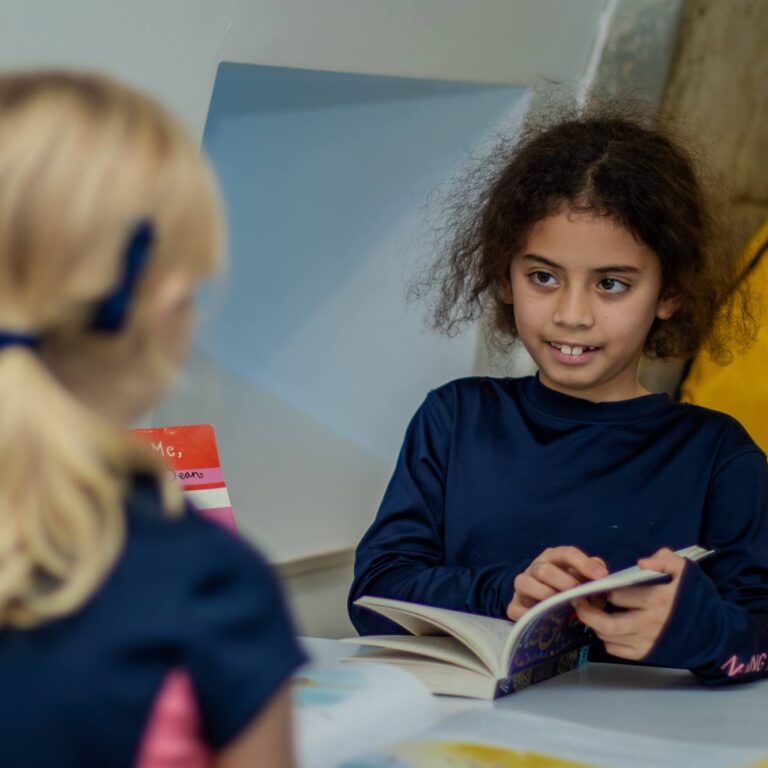
Our fully outfitted library offers a haven for children who wish to advance their learning in their own time, with a large selection of both fiction and non-fiction books appropriate for ages 4-13.
Critical Problem Solving
Thinking Maps are visual learning tools that use patterns to link thought processes, helping turn abstract thought into a concrete image and unlocking our pupils’ critical thinking skills.
Students can break down topics and see the patterns between subjects and topics more clearly, building cognitive skills and enabling critical examination of topics or concepts.
Reflective Learning
De Bono’s Six Hats is a simple framework that provides examples of the different ways we think and, once learnt, gives students an independent learning tool they will use for life.
Here is a breakdown of the six hats:
| Hat |
Question It Asks |
Looks Like in Class |
| 🤍 White |
What are the facts? |
Gathering data |
| ❤️ Red |
What’s my gut feeling? |
Voicing instinct |
| 🖤 Black |
What could go wrong? |
Spotting flaws and risks |
| 💛 Yellow |
What’s the best case? |
Finding value and benefits |
| 💚 Green |
What else is possible? |
Generating new ideas |
| 💙 Blue |
How are we thinking? |
Planning and reflecting |
Metacognition
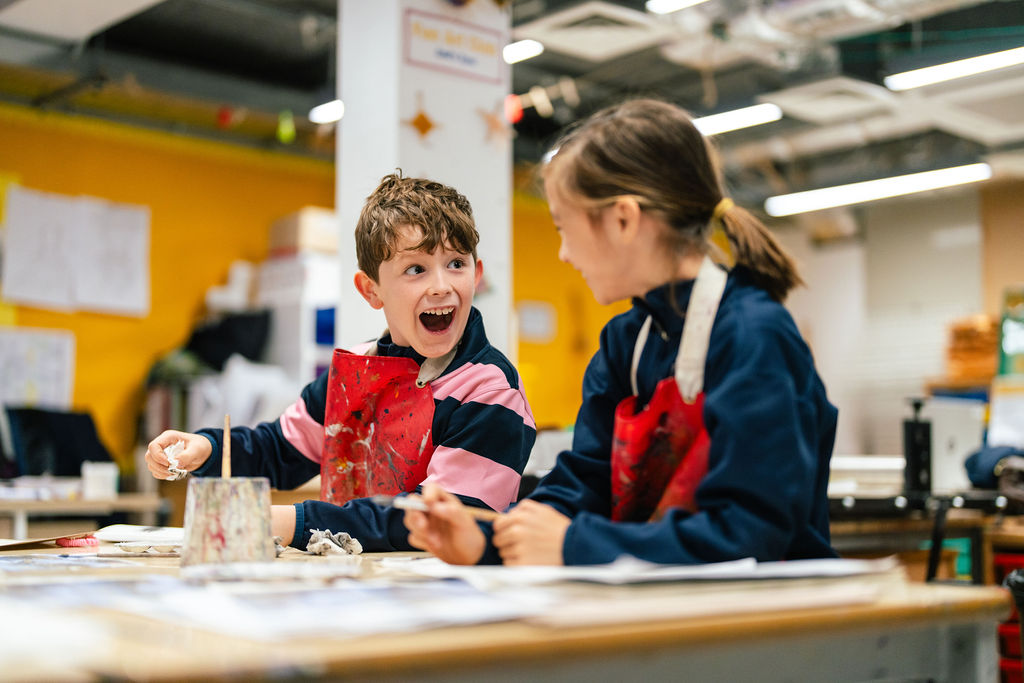
Philosophy 4 Children, or P4C, is taught to every year group from Reception, using a discussion-based approach in which pupils develop and explore philosophical questions together.
Thinking about thinking, or metacognition, is an important aspect about NHP. It has been proven to build communication skills and independent reasoning and links closely to our existing PSHE and Humanities lessons.
Collaborative Learning
These cognitive curriculum skills do not exist in a vacuum; our students need to ensure they can collaborate with one another and foster a pleasant, communicative environment.
You can see for yourself at our open days how our Rabbits with the Habits are placed around the school, promoting a code of ethics and behaviour that teaches our students to make good personal choices and be considerate members of the community.
Learn about our Philosophy